What does it mean to make something?
Last night I did something unusual: I went to a comedy show to see a friend's friend do standup. I know, right? Thing is, it was delightful. (This is a rare thing.) And it got me thinking again about a question I've been rotating in my mind for the last couple months: what does it mean to make something? Those comedians were up on stage (there wasn't a stage) performing new jokes to people they didn't know because they wanted to.
The thought hit with the force of revelation, possibly because of the drinks. But it felt resonant. Performing at the back room of a bar on a Thursday night isn't going to make you famous, even if you are farming crowdwork clips for the disaffected scrollers on TikTok. And everyone in the room knew it. They were there because they wanted to be, because they loved the thing they were doing. It was about simple pleasure. And sex jokes.
So again: What does it mean to make something? Sure it's silly and more than a little self-indulgent to ask, but I think it conceals a spectrum of other, related questions that I feel are vitally important to anyone trying to make anything. Namely: who should the work be for — is it private or public — and who should be doing it? And: If we are to make art at all, what can make it sustainable? What does sustainable even mean? And on, and on.
I'm thinking about this stuff for a fairly mundane reason: I'm working on a game that I hope to release sometime this year. As it's gotten farther along, I realized I'd been unconsciously asking myself questions I'd normally reserve for pitching paying work. Boring stuff about money, or reach, or strategy. Important in their contexts, of course, but certainly not now. What's important now is a) shipping the damn thing, and b) trying to answer the questions finishing the thing provokes.
It was about simple pleasure.
Happily, it seems like a lot of writers I admire have been thinking about the same thing. (If I had to guess why: the relentless destruction of the creative industries by the worst people on Earth really puts things into perspective.)
In my friend Larissa's debut novel Discipline — go buy it! — Christine, the protagonist, is giving a talk to a group of students about her novel. A student asks: How do you know when something is worth working on? "But I couldn't think of anything to say in the moment that wouldn't sound bald and false. You don't, I said. You don't know whether something is worth continuing, not until you've started it. And sometimes even then you don't know. But you have to keep working at it, I said." And then: "[...] I wasn't sure if it was actually me speaking. It seemed like the voice of someone else."
I was struck by the scene, and the clear articulation of the faith that making art — making anything, really — requires. You pose a question to the world and answer it yourself, in your medium. It has to be for you because it is you. But that's maybe a bit too heady. The other day I was watching my stories (yes, on Instagram) and I saw one from the writer Monica Heisey, who had linked a newsletter she'd written about making private work:
on sunday night my best friend laura displayed a show of eight paintings for an audience of two: myself and our other best friend, tess. she had, in fact, made them just for us. we were invited to the show four weeks ago, when she came up with the idea; as she worked she would occasionally tell us how “our” paintings were coming along. she wanted to make art with a deadline but none of the other pressures of an exhibition, and worked nearly everyday that followed to produce a run of eight dreamy, hazy, surreal and special paintings. by all accounts this was a rewarding and exciting process for her, and we had the pleasure of a kind of advent period, waiting excitedly to see the finished work. in the end the experience of the show was one of the most intimate of my life, and tess and i found ourselves profoundly moved, doing the classic girl thing of both crying immediately, then crying harder when we realized the other person was also crying. did i write a poem about it later? none of your business!
 monica heisey
But what comes next is fascinating:
i don’t know if laura will exhibit this work publicly. it is completely gallery-ready, but that is not, really, the point. she has already achieved her goal: creating a cohesive and personal body of work after months of individual commissions, working to fulfill the briefs and desires of others. i realized, while hacking away at my notebook afterwards, that my “poetry practice” (such as it is) (sorry to say “practice”) marks the first time in the last eight years that i have written something for nothing: there is no forthcoming paycheque, no terms for this commission, and god willing there will be no audience. if i don’t like it, i can walk away. if i do like it, it can be for insane reasons, good reasons, or none. it’s mine.
Do you see it? Another answer to the question. The ghost of commissions past does haunt us — outside of this game, it's hard to remember the last time I worked on something without expecting some kind of remuneration. Money is necessary, sure, but it can be poison. (I also write secret poetry, some of which I post.) The punks and DIYers know that in their bones. And when you look at the state of the creative industries, when you see that all the money in the world hasn't gone to much more but making the wrong people richer, it's hard to fault them.
When you ask what it means to make something, one of the related questions you encounter is: Okay, now how do I make it? What's the version of my vision that I can bring into being? In games, we talk about different levels of polish, of the various shapes a thing could take as though they're in superposition; it is a useful exercise to think about the multifarious forms an idea can take. Some of this comes down to money — e.g., the game you make when you're doing it yourself vs. the game you make when a publisher gives you a million dollars — but a lot of it doesn't. I've been thinking about the DIY answer to the question ever since I saw Lincoln Michel's newsletter post about punk rock, on the occasion of the closure of The Washington Post's book section.
 Lincoln Michel
I’m not sure how we can even save books criticism, which to do seriously and at length requires the kind of money you cannot get from Substack subscriptions. But I know that billionaires aren’t going to save us.
When I was growing up as a weird kid in rural Virginia, I was drawn, like many other weird kids, to punk music and the punk scene. There’s a lot I found in that world, from the politics to the connections with other artistic movements like Surrealism. But a central appeal for me was the punk ethos, as I understood it. A Do It Yourself mindset that really meant do it ourselves. It meant contributing. If you wanted to be a part of the scene, you did something. You played in a band or you started a record label or you put on shows or you wrote a zine. Or maybe you brought some food for the touring bands playing in a tiny apartment. Or you did all these things and more. I found this inspiring. The idea that art wasn’t just for everyone, but it was something for anyone who cared enough to participate.
I think that ethos fits very well with the culture we have today. There's nobody but us, you know? I've started to think the various industry upheavals I've lived through were a mirage of a kind; did all we young journalists really think we all needed to get jobs in TV to be successful? Did that happen? And, of course, now TV has been hit pretty hard by the same people.
I like Lincoln's answer to the question, because it's eminently practical. Later in his newsletter he gives some policy prescriptions:
I made lit mag zines with covers I silkscreened after hours in the art department. Later, I co-founded a literary magazine, Gigantic, that we paid for by renting out bars and selling beer and tote bags at launch parties. Etc. My point isn’t that this makes me special. The exact opposite. My point is that you can do this too. Gigantic was one of countless little magazines that started up at the same time. Some of those, like One Story and N+1, are still going strong today and are institutions themselves. There are countless great small presses out there in various genres. There are people who put on reading series and blog about books and all the rest. There are indie and self-pub authors who hustle, going to events and hand-selling their books in the same way bands used to. The DIY ethos exists in parts of publishing. And everything I’m describing here probably gets a big “duh” for those involved in independent music, underground comics, or experimental art. But the bigger we can build alternative channels, the better.
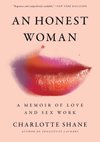
Make the version of the thing you can make. Keep the lights on, but keep the faith. In another happy coincidence, Charlotte Shane sent an issue of her newsletter that hit a little harder.
But the moment is also frightening and disheartening, because old infrastructures are skeletal and the lack of financing feels unsolvable. I find myself thinking this isn’t sustainable of the continual decimation of the media—by which I mean the mass layoffs, the elimination of entire websites and magazines and weeklies and local news—which has been happening aggressively for at least ten years, but what do I mean by that? For whom isn’t it sustainable? In what way? The number of people with real money is minuscule and shrinking, and rich people see greater value in quashing the dissemination of beauty and information than in propagating it. Not long ago, eccentric oligarchs got some social cachet and ego boost from “funding the arts.” This is less true now, for reasons I won’t try to delineate but which I do suspect relate to their monopoly on violence.
 Charlotte Shane
This is a very good question. What could sustainable possibly mean here, other than financially expedient? And that isn't what we should care about. As Charlotte writes later:
Yet despite the winnowing of outlets and the absence of monetary compensation, despite the non-consensual omnipresence of A.I. and the deafening, incessant screams of its worshippers, people’s desire to make art and music and particularly to write seems more evident and acute now than I can recall in my life to date. It must be connected to the dismantling of all social support and sops, the lie of America flamboyantly flaming out, extinguishing more and more lives as it goes. The horrors activate our impulse to make meaning, I think.
As I am fond of reminding myself, there is no human circumstance so degraded that people give up on art. They sing and paint in prison, compose poems at the risk of detention or execution, write while blind and dying in a body that can barely move. What excuse do I have not to do it?
Making things is a pleasure, it is holy, it is something we do instinctively — like breathing — and it is something we can't stop. The creative impulse is one of the things that makes us human, I think. It's important to say that, even if it does feel, as they say, a little cringe. It is good to make things.
Question: What does it mean to make something? Answer: everything. Keep the faith.